

Perfect surfaces with
High-Precision Machining
Key Takeaway
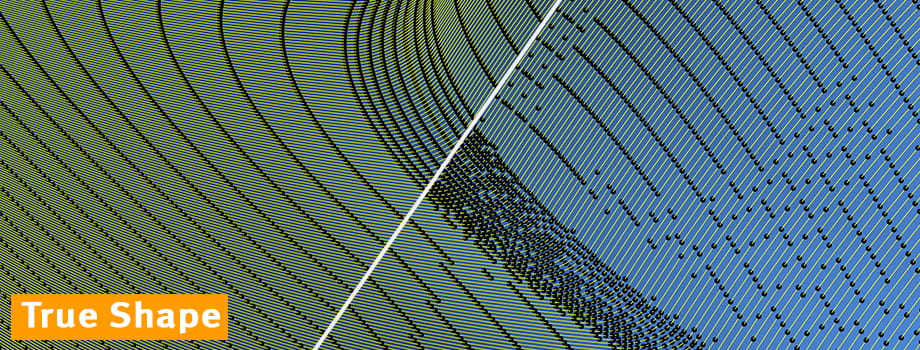
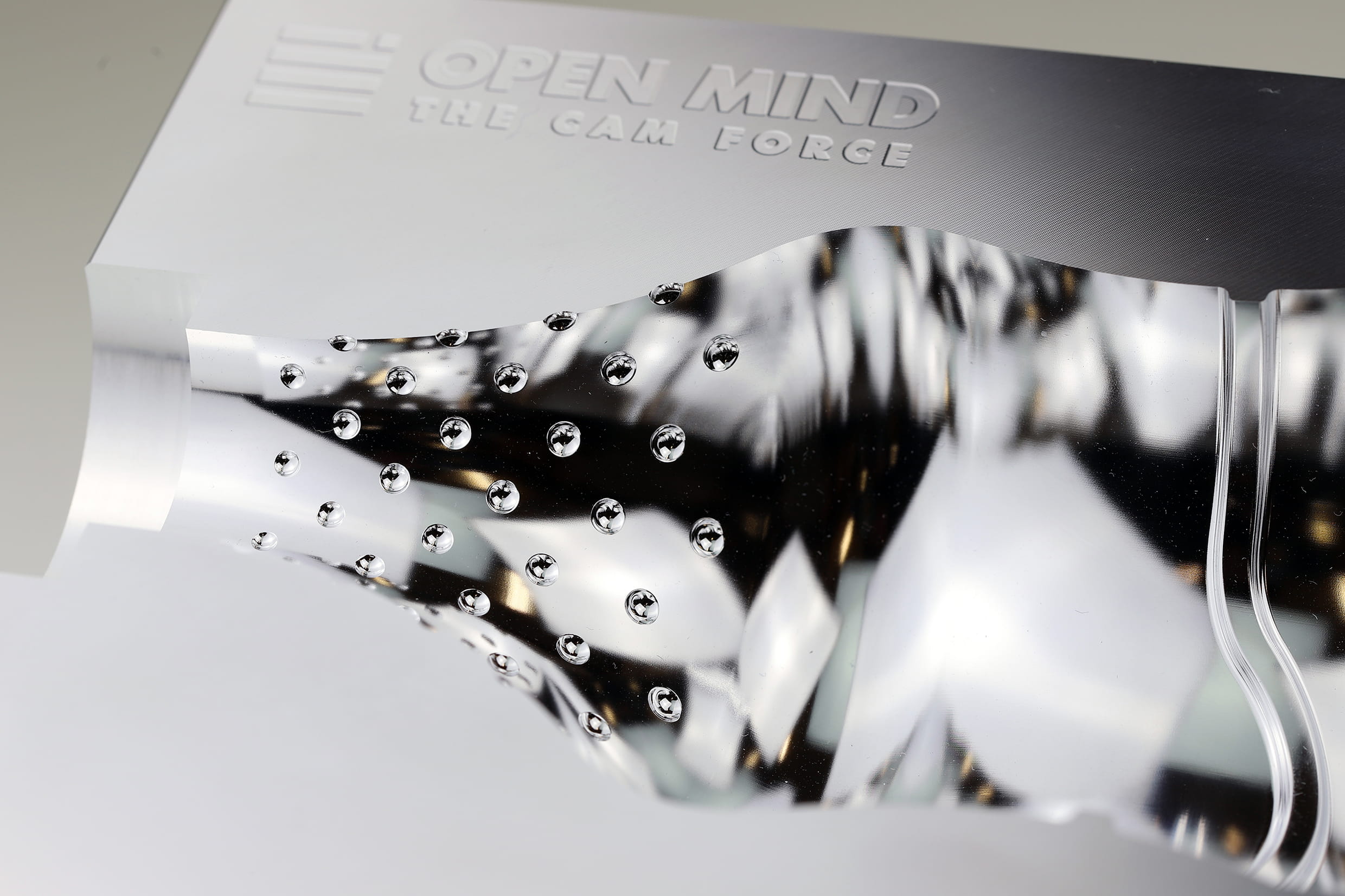
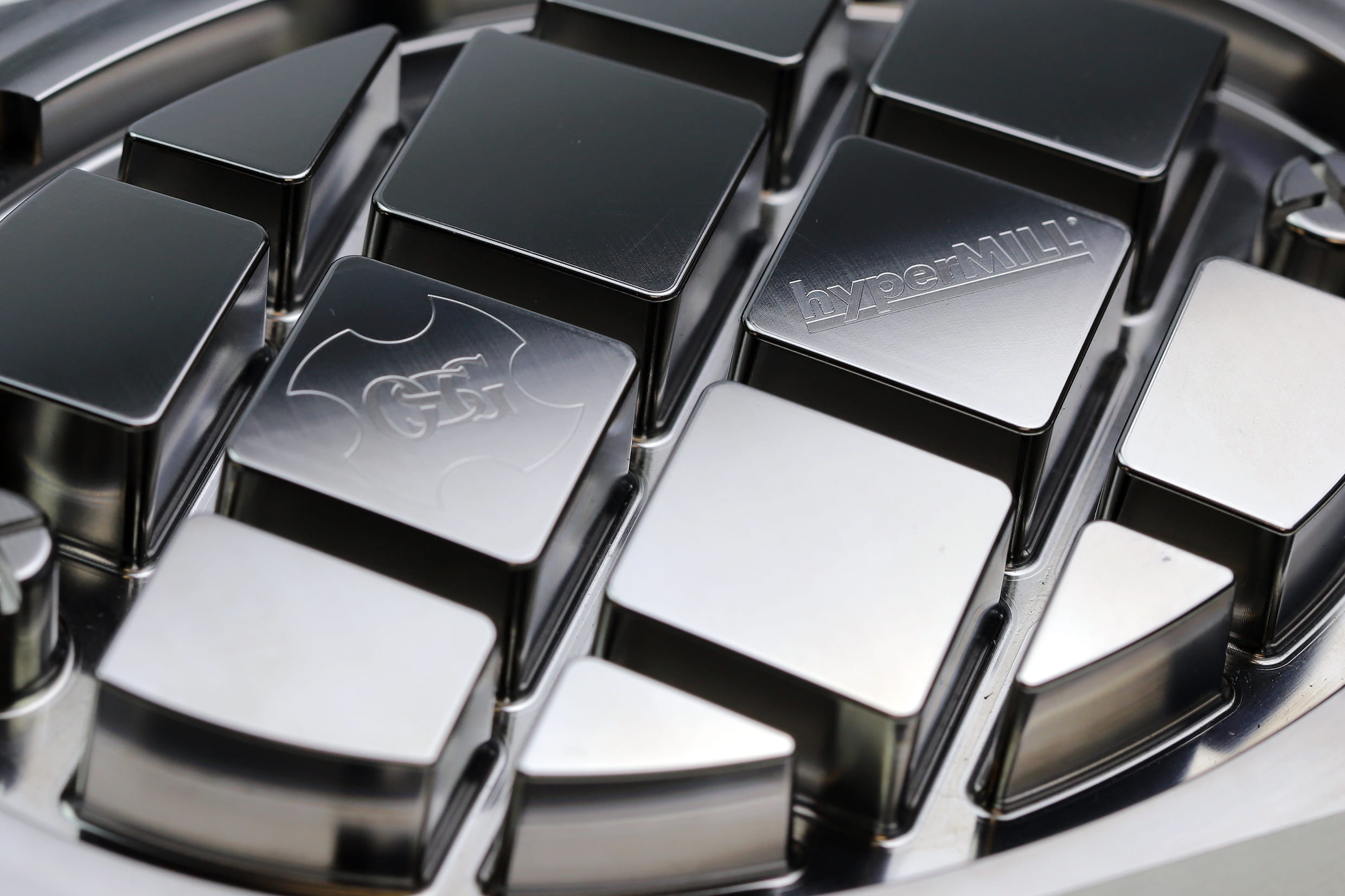
Precision by Design: Smooth, efficient machine motion starts with the right NC point distribution. In 3D finishing, NC points must be positioned precisely and distributed in a way the CNC control can process efficiently. NC programs generated with hyperMILL®'s True Shape technology enable smooth, precise machine motion. This supports shorter machining times and consistently high surface quality.
What makes True Shape special? True Shape places NC points at geometrically relevant positions while ensuring an even, machine-control-friendly point distribution. To achieve the required accuracy, toolpaths are calculated directly on the CAD surfaces rather than on tessellated geometry. Combined with additional High-Precision Machining functions, this gives you precise control over surface quality throughout the finishing process.
Video: Mirror-Like Surfaces with High-Precision Machining
“Quality over quantity. hyperMILL® generates an optimized NC program structure for smooth, precise machine motion.”
Peter Brambs
Director Product Management & Innovation • Innovation and Patents

Key features for High-Precision Machining
High-quality surfaces depend on more than point distribution alone. From feedrate control and tool compensation to smooth transitions and edge protection, hyperMILL® provides dedicated functions that help maintain precision throughout the finishing process.

Feedrate adaption
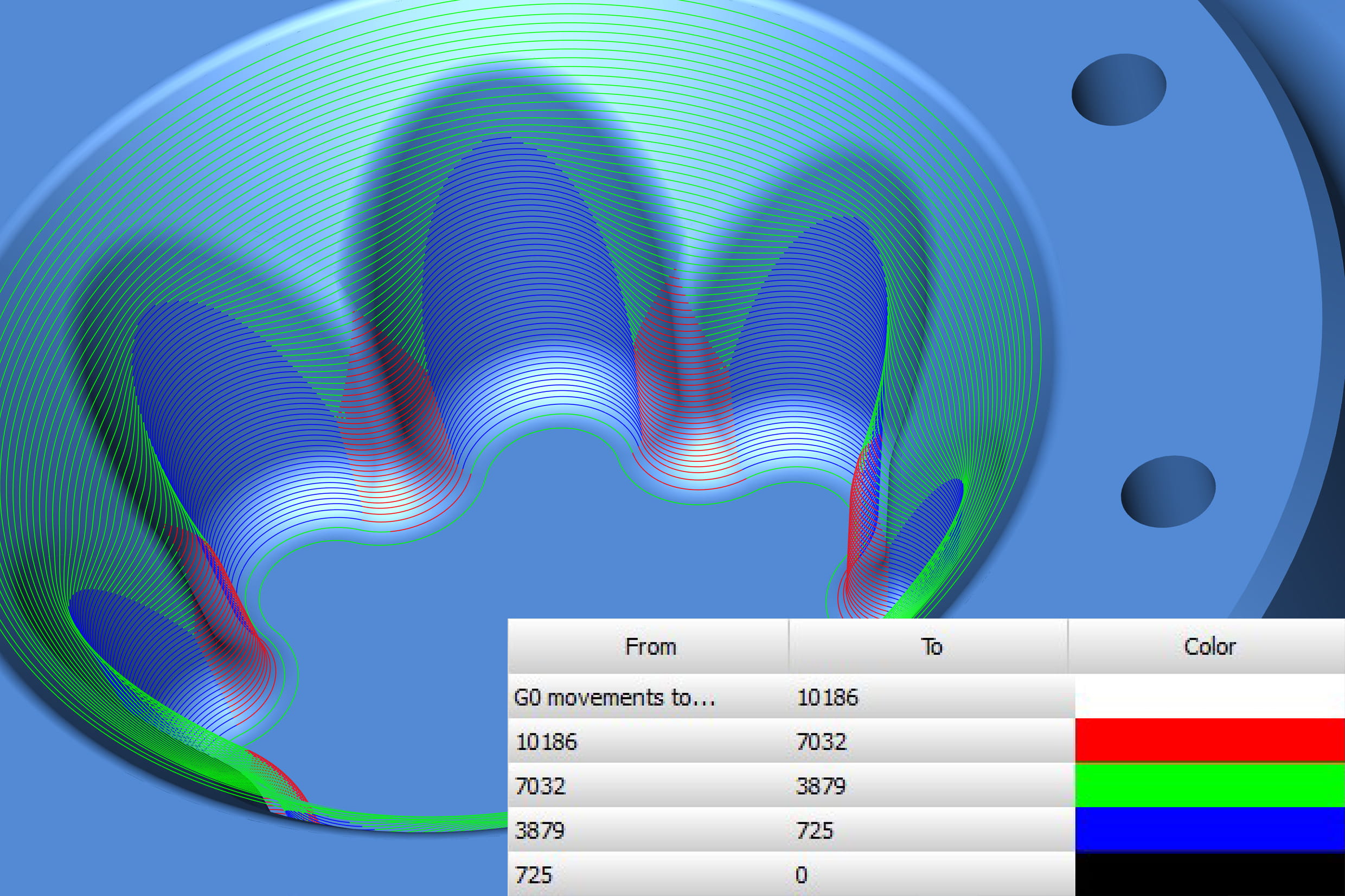
Even with the right cutting tool and machining parameters, changes in surface curvature can affect the effective feedrate at the tool contact point. Feedrate adaption automatically reduces the feedrate on concave surfaces and increases it on convex surfaces, helping to maintain a constant contact feedrate and achieve a more consistent surface finish.
3D path compensation
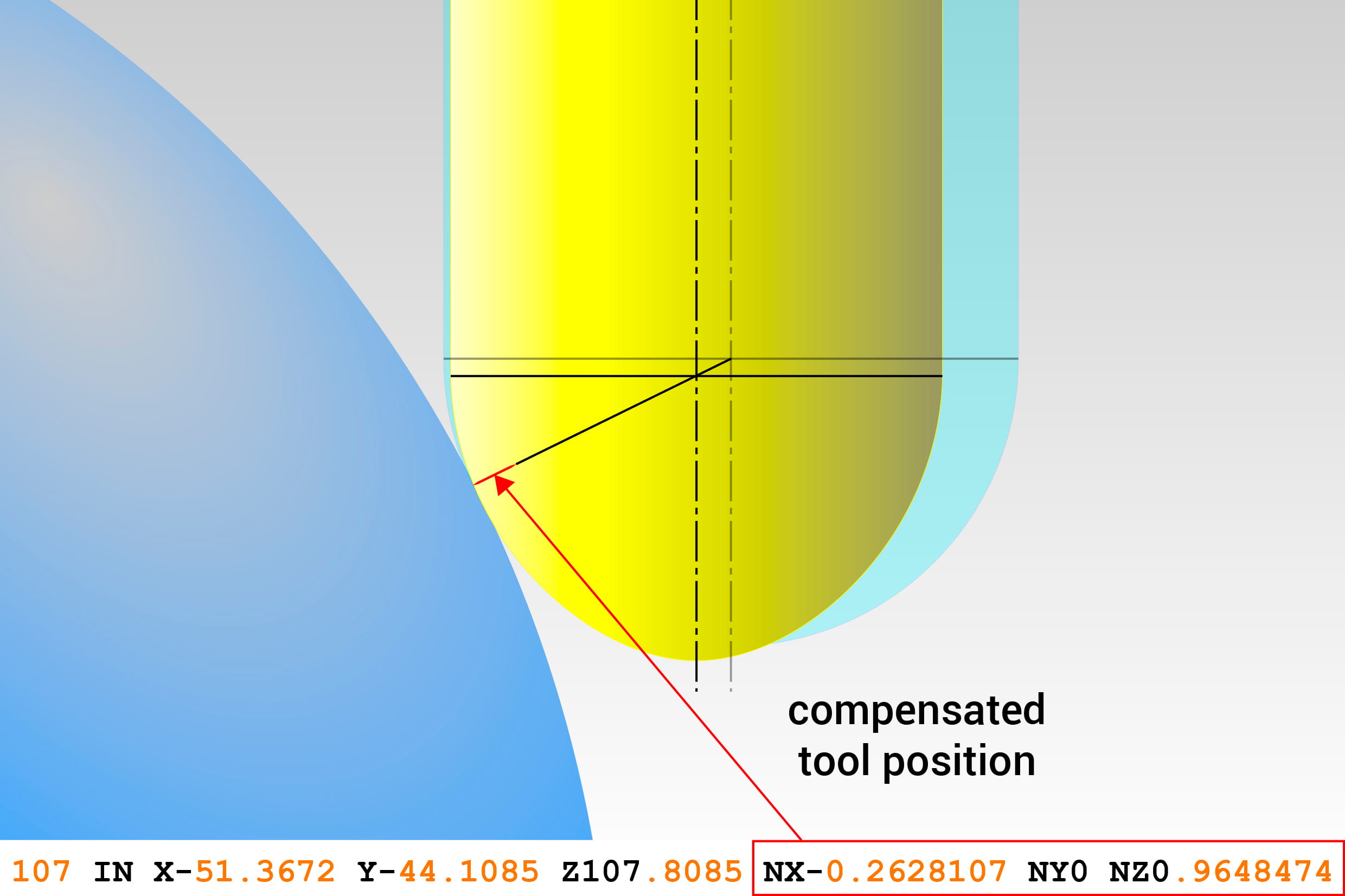
For high geometric accuracy, the actual geometry and dimensions of the cutting tool also need to be taken into account. 3D path compensation corrects deviations between the nominal and actual tool geometry. Precise contact-point vectors derived directly from the CAD surfaces allow the machine control to compensate the toolpath accordingly and further increase machining accuracy.
If the machine or control does not support 3D compensation, hyperMILL® VIRTUAL Machining can adapt the NC program based on the actual tool geometry and dimensions. This generates an NC program matched precisely to the tool used on the machine.
Flawless transitions
Complex components are often divided into separate machining areas and finished with different tools or tool orientations. Smooth Overlap automatically blends the transition zones between these areas, minimizing visible or measurable steps and helping create a consistent surface finish.
Sharp edges
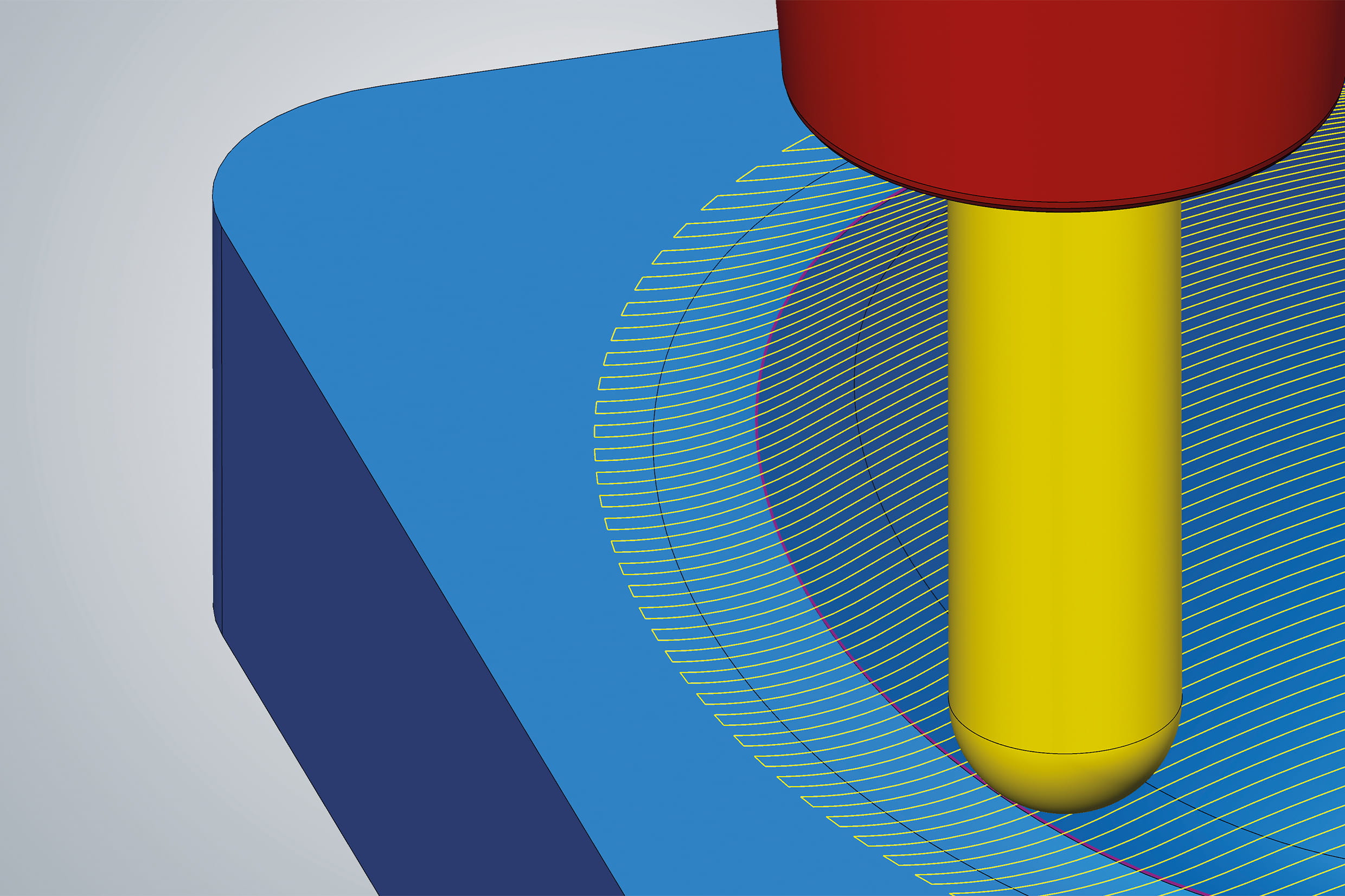
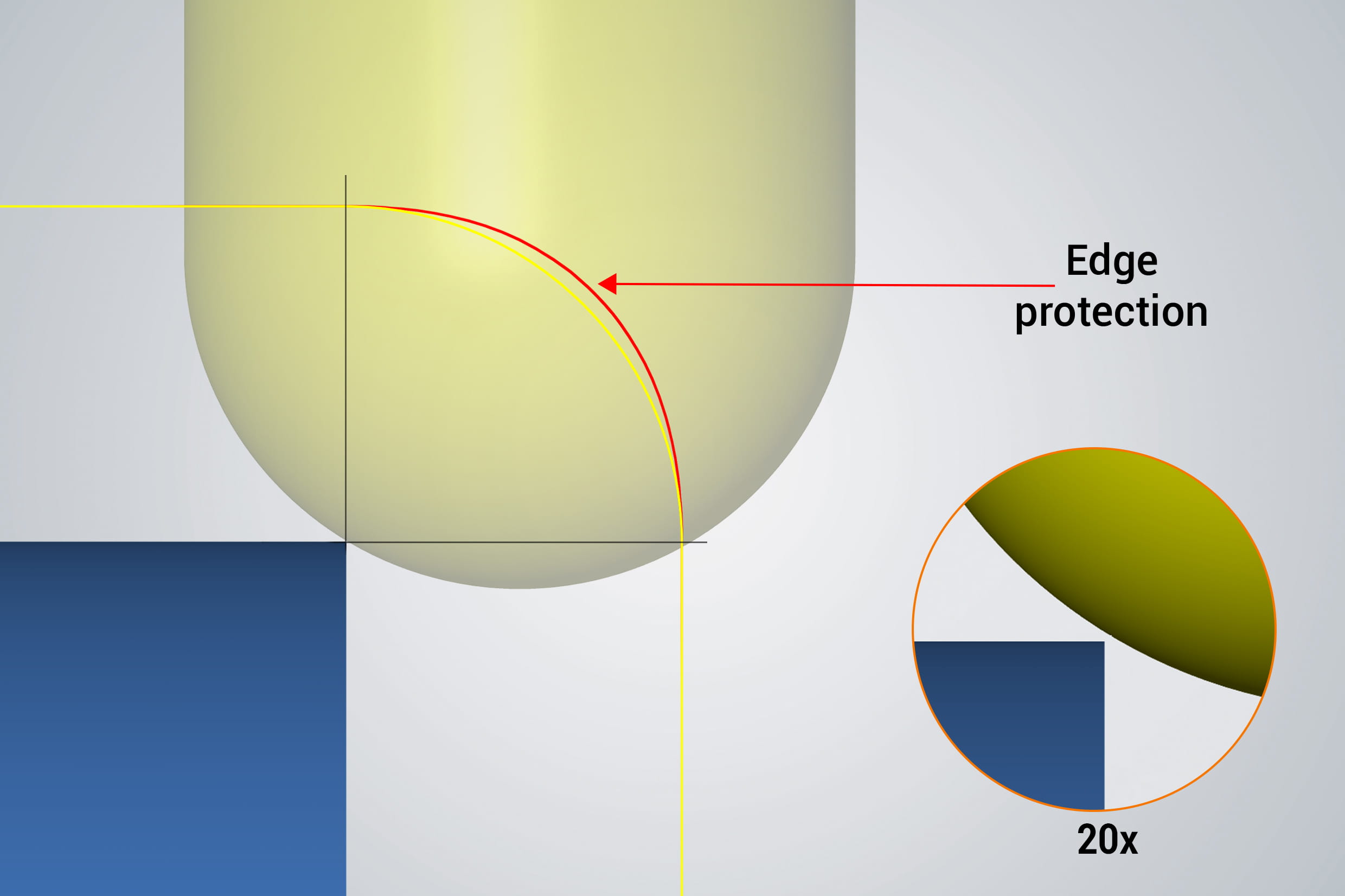
Depending on the machining strategy, sharp edges can be protected in two ways: by extending the toolpath beyond the edge or by protecting the edge within a continuous toolpath using True Shape.
For continuous toolpaths across complex 3D surface groups, the True Shape “Protect edges” option automatically detects sharp edges in the model geometry and positions NC points precisely around them. This helps preserve the intended edge geometry and prevent inaccuracies at transitions.
Automatic Surface Extension
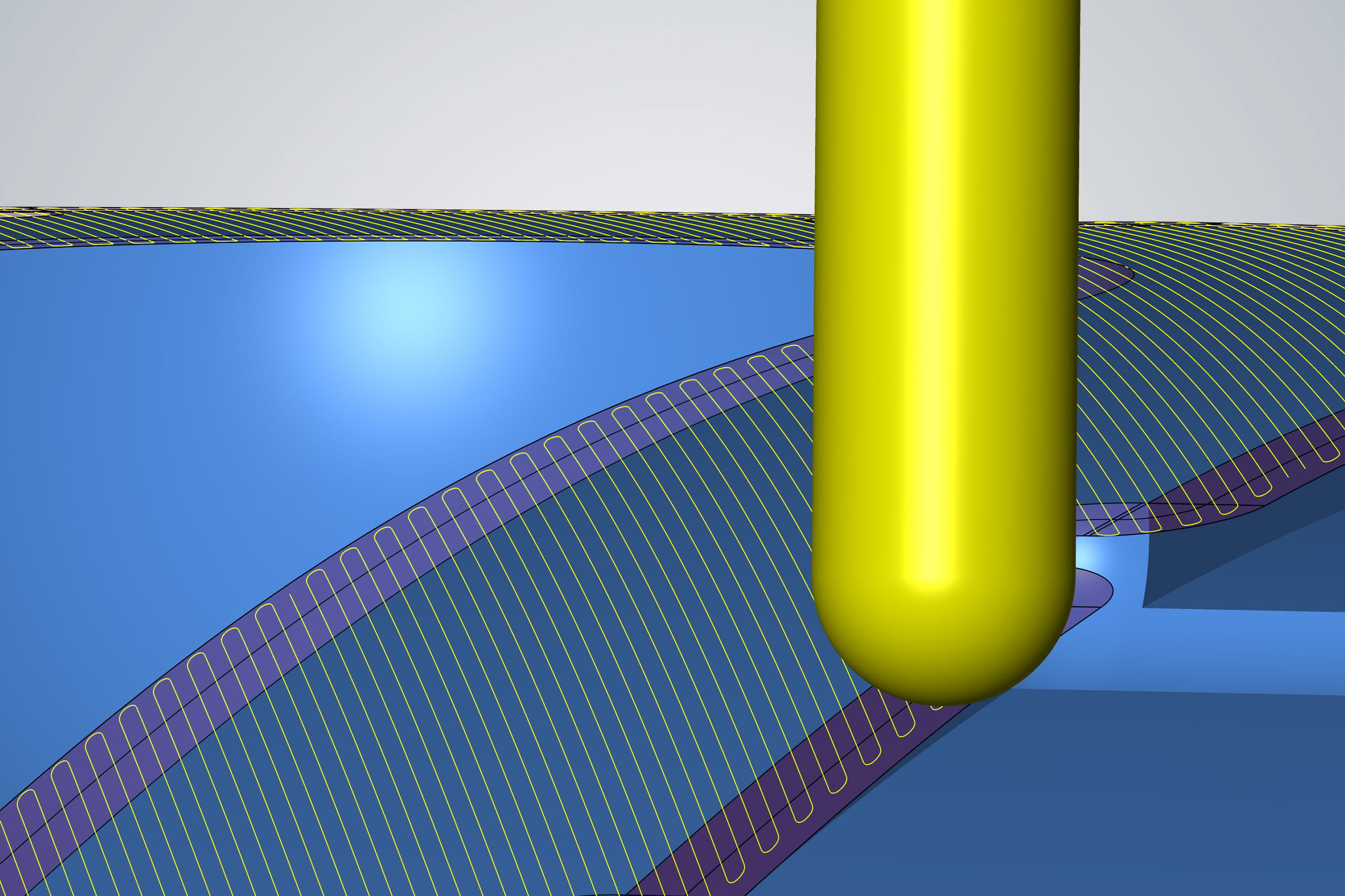
To machine surfaces completely while preserving sharp component edges, milling surfaces sometimes need to be extended. The Automatic face extension function does this directly during programming, eliminating the need to modify the CAD model beforehand. hyperMILL® extends the perimeter of the selected milling surfaces and generates the toolpaths accordingly.
Headlight Mold | DMG MORI
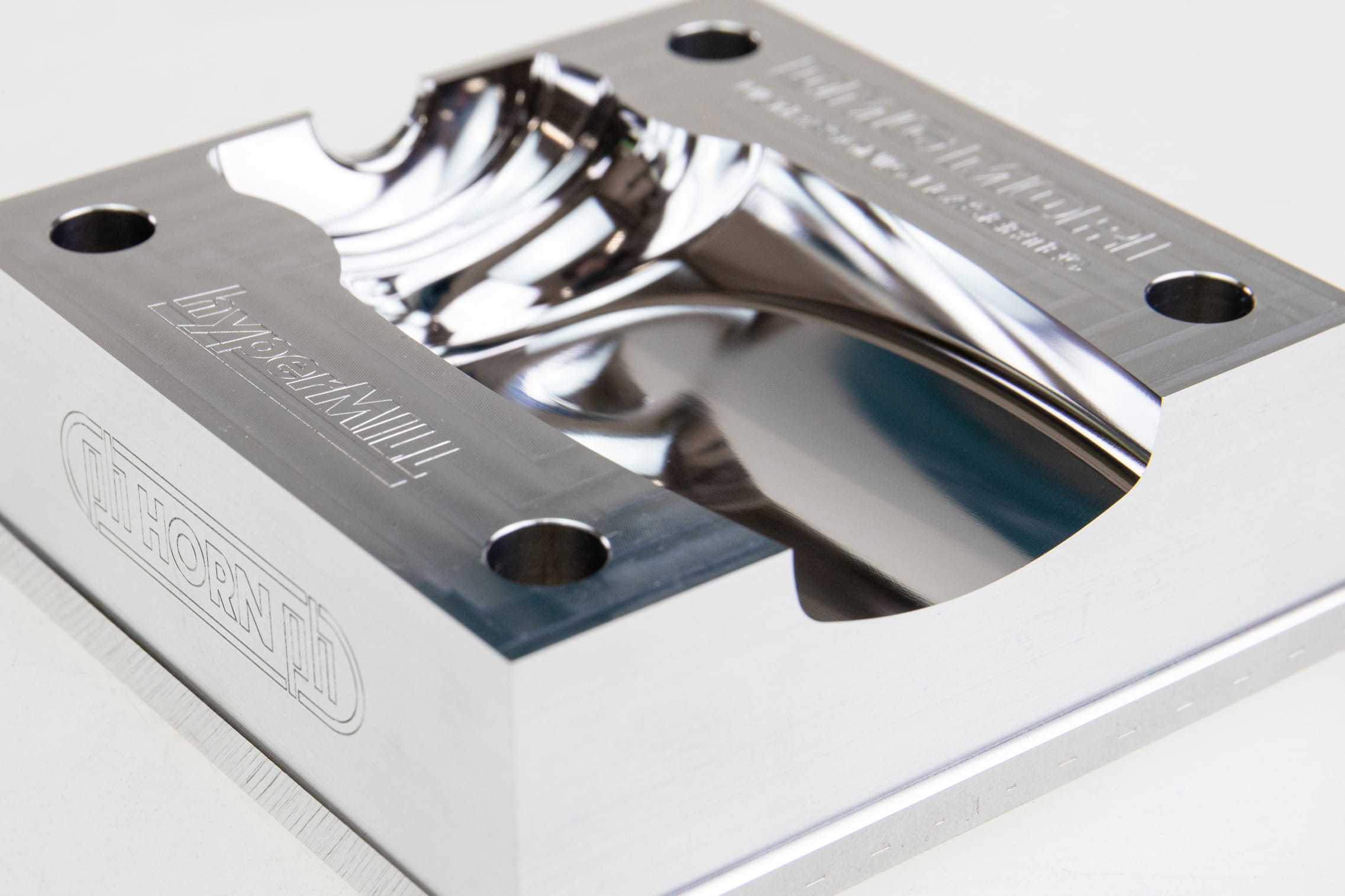
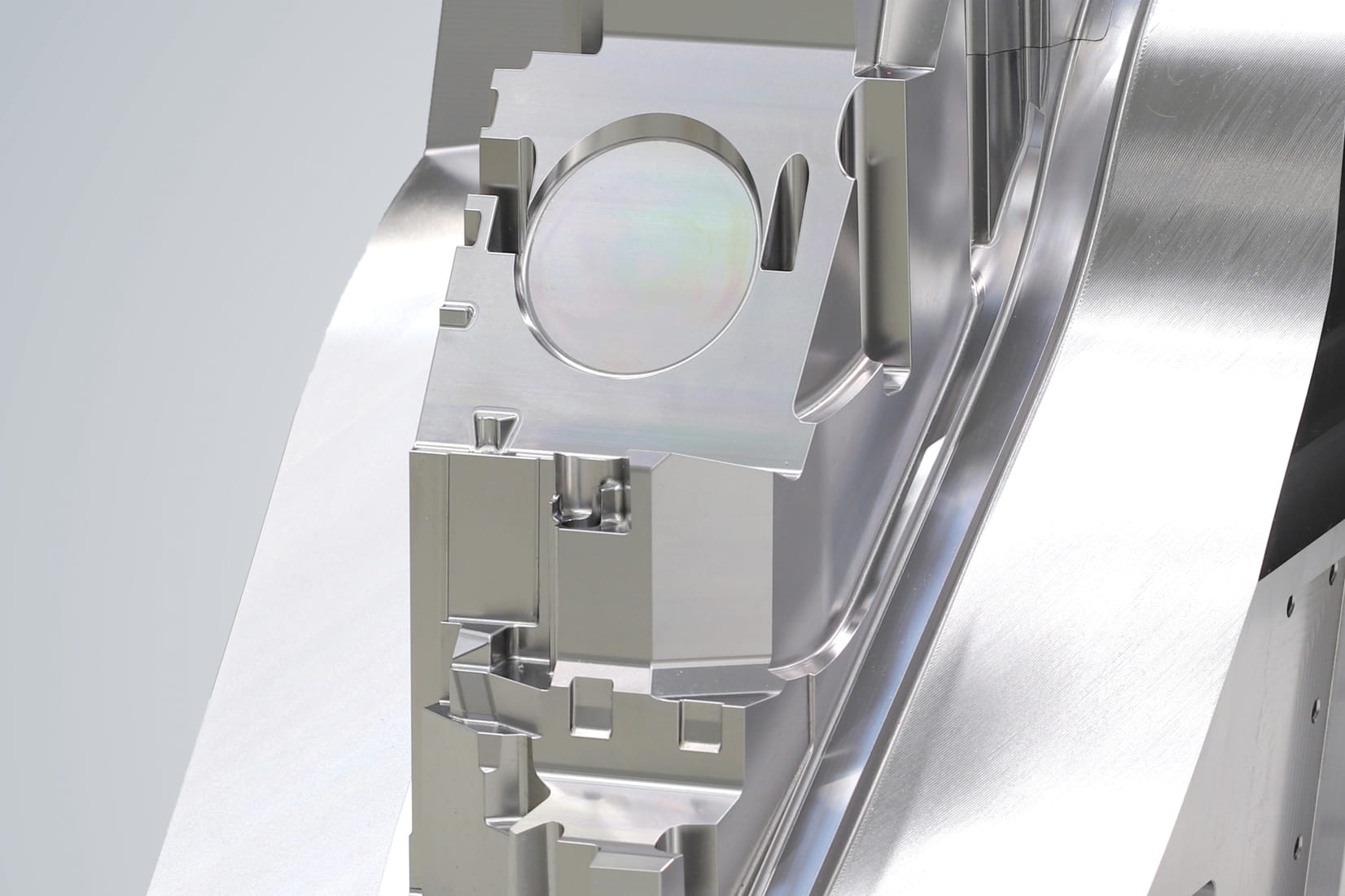
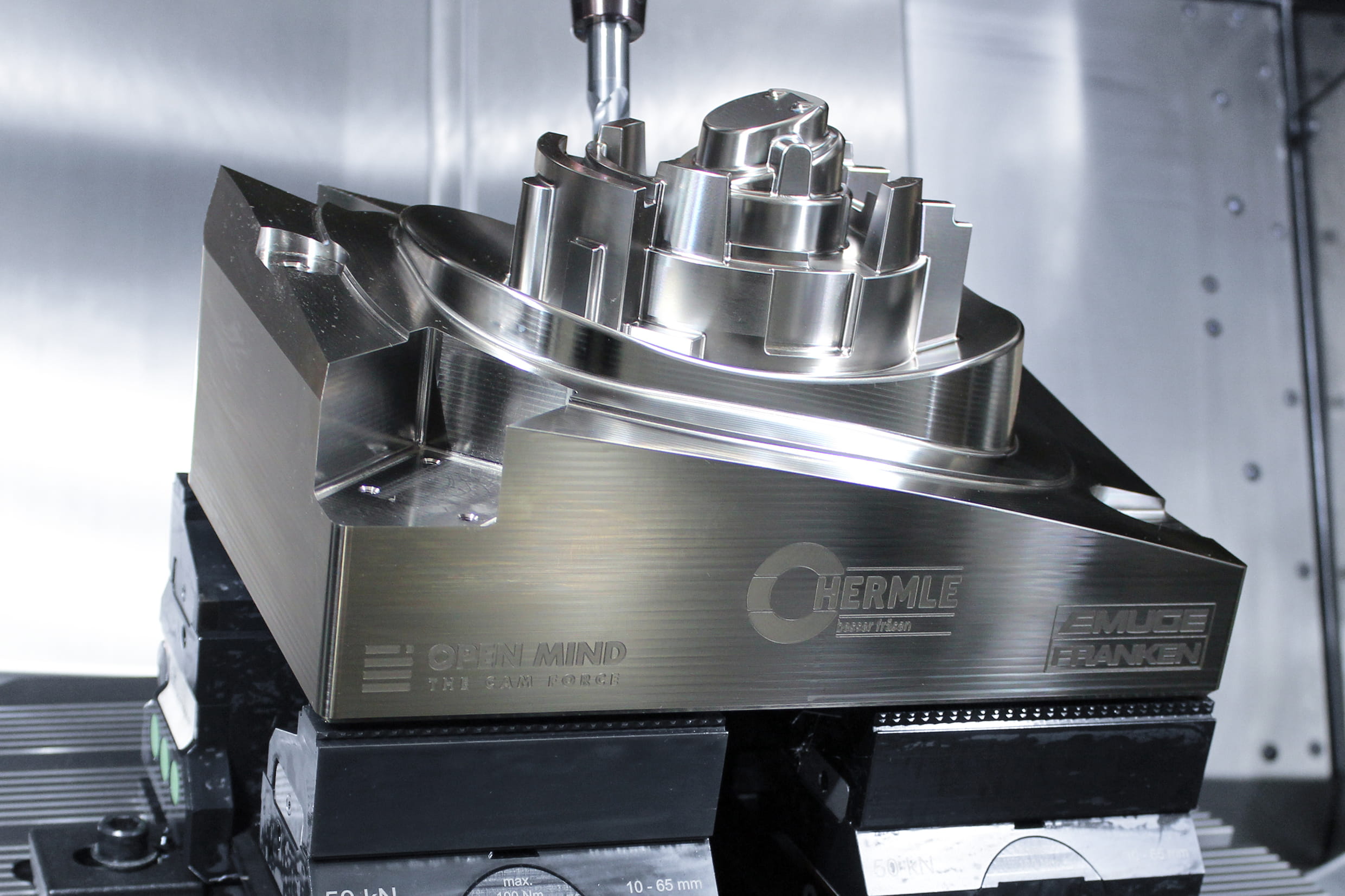
High-Precision Machining at its best: Discover how hyperMILL® and DMG MORI produce a complex headlight mold core with exceptional accuracy, surface finish, and process reliability. Combining hyperMILL®, hyperMILL® VIRTUAL Machining, and DMG MORI technology enables a seamless workflow from CAD/CAM programming to optimized NC code and flawless machining.
Push precision to the next level.
See how advanced machining strategies deliver outstanding surface finishes and maximum accuracy for demanding components.

See Precision in Action
FAQ: High-Precision Machining
What is True Shape technology, and why is it important for High-Precision Machining?
True Shape is a hyperMILL® technology for generating highly accurate 3D finishing toolpaths directly on the original CAD surfaces. NC points are placed at geometrically important positions and distributed evenly along the toolpath.
This gives the CNC controller the precise and well-structured data it needs to reproduce the intended component geometry as accurately as possible. Sharp edges, tangent surface transitions, and adjacent toolpaths are represented with particular precision.
Instead of simply increasing the number of NC points, True Shape focuses on placing the right points in the right locations. This creates the foundation for excellent surface quality, high dimensional accuracy, and smooth machine movements.
How does True Shape differ from conventional toolpath generation?
Conventional toolpaths may be calculated on a tessellated or mesh-based representation of the component. Even with very small tolerances, the resulting toolpath can reproduce minor facets or geometric deviations from the mesh on the finished surface.
True Shape generates the toolpath analytically on the CAD surfaces. This avoids unnecessary approximation and allows geometrically relevant locations, such as sharp edges and tangent surface boundaries, to be represented precisely.
The NC points are also distributed evenly and synchronized where adjacent paths meet critical changes in curvature. This helps prevent visible marks, irregular transitions, and other surface artifacts that can occur with conventional point distribution.
How does True Shape improve both surface quality and machining time?
True Shape achieves maximum toolpath quality with only the number of NC points that are actually required. The even point distribution helps the CNC controller process the NC program efficiently and maintain smooth, consistent machine movements.
Optional point filtering can further reduce unnecessary points on planar or less complex areas. This makes NC programs easier to handle, reduces processing requirements during simulation, and helps avoid memory limitations on certain CNC controls.
At the same time, the precise toolpath prevents irregular machine movements that may affect the finished surface. The result is a combination of shorter machining times, smoother machine operation, and consistently high surface quality.
How do feedrate adaptation and 3D path compensation support High-Precision Finishing?
Feedrate adaptation controls the programmed feed based on the actual contact point between the cutting tool and the component surface. It maintains a more consistent feed per cutting edge, even when the effective cutting diameter changes in convex or narrow concave areas.
This allows higher general feedrates without having to program the entire operation for the most critical machining situation. It also supports consistent material removal, improved surface quality, and longer tool life.
3D path compensation takes the real geometry and dimensions of the cutting tool into account. Highly precise contact vectors derived from the CAD surfaces allow deviations in the actual tool shape to be compensated directly by the CNC control or through hyperMILL® VIRTUAL Machining. This enables an even higher level of geometric accuracy.
Which applications benefit most from True Shape, and is it included in hyperMILL®?
True Shape is particularly beneficial wherever ball mill finishing strategies are used and exceptionally high requirements are placed on surface quality and dimensional accuracy.
Typical applications include optical components, high-quality injection molds, blow molds, sheet metal forming dies, precision components, and demanding parts for the aerospace and general manufacturing industries.
True Shape is included in the standard hyperMILL® package and is available in supported machining cycles under suitable conditions. These include the use of a ball mill and compatible allowance settings. For the best machining results, the machine’s high-speed functions and controller tolerances must also be configured appropriately.